.png)


Fully Qualified SMP Artist | Glasgow Based | Male & Female Treatments | Free Consultations Available |

Addressing Hair Transplant Scarring With Advanced SMP
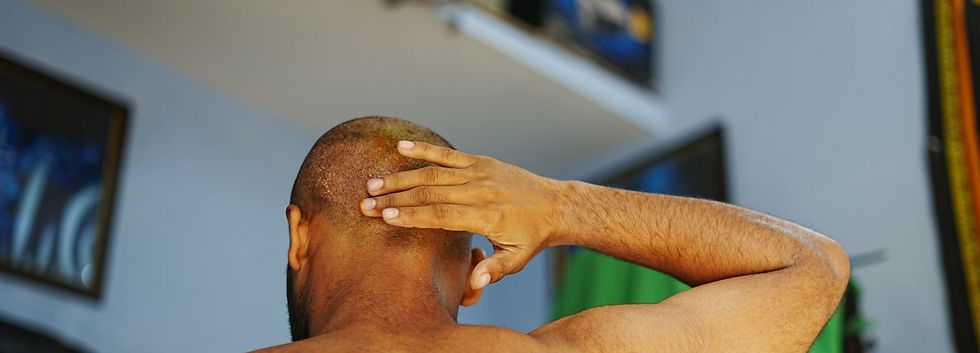
Hair transplant procedures, whether strip-based FUT (Follicular Unit Transplantation) or the minimally invasive FUE (Follicular Unit Extraction) method, frequently leave residual scarring that can be a significant source of concern for clients. FUT procedures typically produce a linear scar across the back of the scalp, while FUE techniques result in scattered circular donor site scarring - both of which can become conspicuous when the hair is worn short or the scalp is closely examined.
At PADDA Glasgow, we offer specialist SMP scar camouflage treatments specifically designed to address both FUT and FUE scarring. Using advanced micropigmentation techniques, we replicate the appearance of natural hair follicles within and around the scar tissue - visually integrating the scarred area with the surrounding scalp and significantly reducing its visibility.
.jpg)
Understanding FUT and FUE Scarring
FUT - Linear Strip Scar Follicular Unit Transplantation involves the surgical removal of a strip of scalp tissue from the donor area, typically across the back of the head. Once healed, this produces a linear scar that can range from fine and discreet to wide and pronounced depending on the individual's healing response, surgical technique, and hair characteristics. This type of scarring is particularly noticeable when the hair is worn short or shaved.
SMP for FUT scarring involves the precise application of pigment along the length of the scar, carefully matched to the surrounding scalp tone and hair colour. When treated effectively, the scar is rendered virtually invisible — even at very close range.
FUE - Circular Donor Site Scarring Follicular Unit Extraction involves the individual extraction of follicular units from the donor area, leaving small circular scarring distributed across the back and sides of the scalp. While individually small, these marks can collectively create a noticeable stippled or mottled appearance — particularly on clients with lighter skin tones or when the head is shaved.
SMP for FUE scarring involves the targeted placement of pigment within each extraction site, restoring a consistent tone and texture across the donor area and creating the appearance of a uniform, natural scalp.
The Treatment Process

Scar tissue presents unique challenges in micropigmentation. Its altered texture, reduced vascularity, and differing pigment retention characteristics compared to healthy skin require a specialist approach and a practitioner with specific experience in scar work. At PADDA, scar camouflage is treated as a distinct discipline — not an extension of standard SMP technique.
A thorough assessment of the scar tissue is conducted, taking into account its age, texture, colour, width, and location. The most appropriate treatment approach is determined at this stage.
Stage 1 — Initial Consultation
For clients with particularly complex or extensive scarring, a small test area may be treated in the first instance to assess pigment retention and healing response within the scar tissue before proceeding with full treatment.
Stage 2 — Test Area
The initial session introduces pigment into and around the scar tissue, beginning the process of tonal integration with the surrounding scalp. Needle selection, depth, and pigment concentration are adjusted throughout to accommodate the characteristics of the scar.
Stage 3 — Foundation Session
Subsequent sessions build upon the initial work, refining coverage and ensuring a consistent, seamless result across the full treatment area.
Stage 4 — Refinement Sessions
A comprehensive review is conducted upon completion to confirm the result meets the agreed standard. Due to the variable nature of scar tissue, additional sessions beyond the standard course may occasionally be required — this is discussed openly throughout the process.
Stage 5 — Final Assessment
Is Scar Camouflage Treatment Suitable for You?
SMP scar camouflage is suitable for clients with both FUT and FUE scarring and is effective across a range of scar types, ages, and skin tones. Results are influenced by the individual characteristics of the scar tissue and are discussed candidly at your initial consultation.
Have a linear FUT donor scar that is visible when the hair is worn short or shaved
Have FUE extraction site scarring that creates an inconsistent or mottled appearance across the donor area
Are unable or unwilling to wear your hair long enough to conceal transplant scarring
Wish to shave your head but are prevented from doing so by visible scarring
Have previously undergone SMP treatment and wish to address residual scar visibility
Frequently asked questions
Begin Your Consultation
We welcome all enquiries and encourage prospective clients to arrange an initial consultation before committing to treatment. This is a relaxed, no-obligation appointment in which we discuss your concerns, assess suitability, and outline a treatment plan tailored to your needs.